
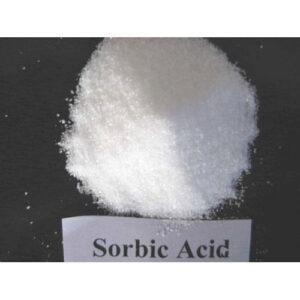
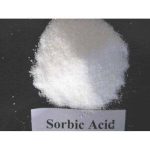
SORBIC ACID
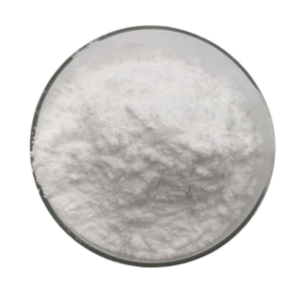
In Stock
Highlights:
Sorbic Acid (E200) – SEO Product Content
Short Product Description
Sorbic Acid (E200)
Food Grade Sorbic Acid – Premium Quality Natural Preservative & Antimicrobial Agent for Food Processing, Beverage Manufacturing & Industrial Applications
Sorbic Acid (E200) is a vital natural food preservative extensively utilized in food processing, beverage production, pharmaceutical manufacturing, and industrial applications. Our technical-grade sorbic acid delivers exceptional antimicrobial performance and preservation effectiveness with superior purity for demanding food processing operations, product preservation, and industrial processes requiring safe, effective microbial control and shelf life extension.
✅ High-Performance Natural Preservative – Superior Antimicrobial & Antifungal Protection
✅ Multiple Grade Formulations – Food Grade, FCC, USP & Industrial Specifications
✅ Essential Preservation Properties – Mold & Yeast Inhibition with Broad-Spectrum Activity
✅ Safe for Food Applications – FDA Approved & Internationally Recognized E200 Standard
✅ Food Processing, Beverage Manufacturing, Pharmaceutical & Industrial Applications
Description
High-Performance Sorbic Acid for Food Processing & Manufacturing Operations
Sorbic Acid (E200) represents advanced natural preservation technology specifically formulated for food processing operations, beverage manufacturing applications, pharmaceutical production, and industrial processes requiring consistent antimicrobial protection and shelf life extension. This essential organic acid serves critical functions across food preservation procedures, product manufacturing applications, beverage production, and industrial processes requiring controlled microbial activity and product stability.
At Chemicals & Process Equipment Limited, we supply high-grade Sorbic Acid manufactured under stringent quality control standards and international food safety specifications. Our comprehensive product range includes food-grade, FCC-grade, USP-grade, and industrial-grade formulations meeting diverse requirements for food processing, pharmaceutical manufacturing, and specialized applications across global food processing, beverage, and industrial markets.
✅ Advanced Natural Preservation Technology – Optimized Antimicrobial & Antifungal Performance
✅ Consistent Quality Standards – Multiple Grade Classifications with Comprehensive Documentation
✅ Essential Preservation Properties – Mold, Yeast & Bacterial Inhibition Support
✅ Multi-Industry Applications – Food Processing, Beverage, Pharmaceutical & Industrial Uses
✅ Technical Support Package – Complete Application Guidance & Process Optimization
For comprehensive information on sorbic acid applications in food processing and preservation, refer to this detailed sorbic acid and natural preservatives guide by ScienceDirect. Our food additives and preservation compounds portfolio provides specialized guidance for optimal preservation performance and antimicrobial effectiveness across diverse food processing applications.
The Sorbic Acid Market is expected to grow from USD 320 Million in 2024 to USD 485 Million by 2031, at a CAGR of 6.1% during the forecast period, while the market achieved a valuation of USD 295 million in 2024 and is forecasted to climb to USD 520 million by 2033, advancing at a CAGR of 8.2% from 2026 to 2033. This growth is driven by increasing demand for natural preservatives, expanding food processing requirements, growing clean-label trends, and rising consumer preference for naturally-derived preservation solutions across global food and beverage markets.
Technical Specifications & Sorbic Acid Properties
| Property | Food Grade FCC | Food Grade USP | Industrial Grade | Pharmaceutical Grade |
|---|---|---|---|---|
| Chemical Formula | C6H8O2 | C6H8O2 | C6H8O2 | C6H8O2 |
| Molecular Weight | 112.13 g/mol | 112.13 g/mol | 112.13 g/mol | 112.13 g/mol |
| Assay (Dried Basis) | 99.0-101.0% | 99.0-101.0% | 98.0-102.0% | 99.5-100.5% |
| Loss on Drying | ≤0.5% | ≤0.5% | ≤1.0% | ≤0.2% |
| Melting Point | 132-135°C | 132-135°C | 130-137°C | 133-135°C |
| Acid Value | 740-755 | 740-755 | 735-760 | 745-755 |
| Aldehyde Content | ≤0.1% | ≤0.1% | ≤0.2% | ≤0.05% |
| Heavy Metals (Pb) | ≤2 ppm | ≤2 ppm | ≤5 ppm | ≤1 ppm |
| Arsenic (As) | ≤3 ppm | ≤3 ppm | ≤5 ppm | ≤1 ppm |
| Mercury (Hg) | ≤1 ppm | ≤1 ppm | ≤2 ppm | ≤0.5 ppm |
| Residue on Ignition | ≤0.2% | ≤0.2% | ≤0.5% | ≤0.1% |
| Total Plate Count | ≤1000 cfu/g | ≤1000 cfu/g | ≤3000 cfu/g | ≤100 cfu/g |
| Yeast & Mold | ≤100 cfu/g | ≤100 cfu/g | ≤300 cfu/g | ≤10 cfu/g |
| E.Coli | Absent/g | Absent/g | Absent/g | Absent/g |
| Salmonella | Absent/10g | Absent/10g | Absent/10g | Absent/10g |
| Appearance | White to off-white crystalline powder | White to off-white crystalline powder | White to pale yellow powder | White crystalline powder |
| Solubility (Water) | 1.6g/L at 20°C | 1.6g/L at 20°C | 1.4g/L at 20°C | 1.8g/L at 20°C |
| Solubility (Ethanol) | 100g/L at 20°C | 100g/L at 20°C | 95g/L at 20°C | 105g/L at 20°C |
| pH (Saturated Solution) | 3.0-3.5 | 3.0-3.5 | 2.8-3.8 | 3.1-3.4 |
| Bulk Density | 0.4-0.6 g/mL | 0.4-0.6 g/mL | 0.3-0.5 g/mL | 0.5-0.7 g/mL |
| Particle Size | 20-80 mesh | 20-80 mesh | 20-100 mesh | 40-80 mesh |
| Storage Conditions | Cool, dry place | Cool, dry place | Room temperature | Cool, dry place |
| Packaging Options | 25kg bags, 500kg big bags, bulk containers |
Available Grade Types:
- Food Grade FCC sorbic acid for food processing applications
- Food Grade USP sorbic acid meeting pharmacopeial standards
- Industrial grade sorbic acid for technical applications
- Pharmaceutical grade sorbic acid for drug manufacturing
- Custom formulations for specific processing requirements
Specialized Packaging Solutions:
- 25kg multi-layer paper bags with PE lining
- 500kg FIBC big bags for bulk operations
- 1000kg bulk containers for large-scale processing
- Food-safe storage containers for processing facilities
- Moisture-controlled packaging for stability
- Light-protected packaging for preservation effectiveness
Food Processing Applications
Baked Goods & Confectionery Sorbic acid is extensively used in bread, cakes, pastries, and confectionery products as an effective mold and yeast inhibitor. Bakery manufacturers utilize sorbic acid for extending shelf life, preventing spoilage, and maintaining product quality in fresh and packaged baked goods requiring extended storage periods.
Dairy Product Preservation Cheese manufacturers employ sorbic acid for surface treatment of hard cheeses, processed cheese products, and specialty dairy applications requiring mold prevention and extended shelf life. Yogurt and fermented dairy producers use sorbic acid for post-fermentation preservation and quality maintenance.
Meat & Poultry Processing Meat processors utilize sorbic acid for processed meat products, sausages, and ready-to-eat meat applications requiring microbial control and shelf life extension. Poultry processing facilities employ sorbic acid for cooked poultry products and prepared meat dishes.
Dried & Dehydrated Foods Dried fruit manufacturers use sorbic acid for preventing mold growth in dehydrated fruits, nuts, and snack products. Food dehydration operations employ sorbic acid for maintaining quality in dried vegetables and preserved food applications.
Beverage Industry Applications
Wine & Alcoholic Beverages Wineries utilize sorbic acid as a primary preservative for stopping fermentation and preventing spoilage in sweet wines, fruit wines, and specialty alcoholic beverages. Breweries employ sorbic acid for beer preservation and quality maintenance in low-alcohol and specialty beer products.
Fruit Juices & Soft Drinks Juice manufacturers use sorbic acid for preserving fresh juices, concentrated products, and fruit-based beverages requiring extended shelf life and microbial stability. Soft drink producers employ sorbic acid for carbonated beverages and specialty drink formulations.
Sports & Energy Drinks Functional beverage manufacturers utilize sorbic acid for sports drinks, energy beverages, and nutritional drinks requiring preservation effectiveness and product stability during storage and distribution.
Dairy-Based Beverages Dairy beverage producers employ sorbic acid for flavored milk products, protein drinks, and specialty dairy beverages requiring microbial control and quality preservation.
Pharmaceutical Applications
Topical Preparations Pharmaceutical manufacturers utilize sorbic acid in topical creams, ointments, and dermatological preparations as an effective preservative system. Cosmetic companies employ sorbic acid for skin care products and personal care formulations requiring antimicrobial protection.
Oral Medications Drug manufacturers use sorbic acid in liquid medications, syrups, and oral suspensions requiring preservation effectiveness and patient safety. Nutraceutical companies employ sorbic acid for nutritional supplements and health products.
Veterinary Products Veterinary pharmaceutical companies utilize sorbic acid for animal health products, topical treatments, and specialty veterinary formulations requiring antimicrobial preservation.
Personal Care & Cosmetics Applications
Skin Care Products Cosmetic manufacturers employ sorbic acid in moisturizers, cleansers, and anti-aging products as a natural preservation system. Personal care companies use sorbic acid for body care products and specialty cosmetic formulations.
Hair Care Applications Hair care manufacturers utilize sorbic acid in shampoos, conditioners, and styling products requiring effective preservation and product stability. Salon product companies employ sorbic acid for professional hair care formulations.
Oral Care Products Oral care manufacturers use sorbic acid in mouthwashes, toothpastes, and specialty oral hygiene products requiring antimicrobial effectiveness and safety.
Industrial Applications
Animal Feed Preservation Feed manufacturers utilize sorbic acid for preventing mold growth in animal feeds, pet foods, and specialty nutrition products. Livestock nutrition companies employ sorbic acid for feed preservation and quality maintenance during storage.
Agricultural Applications Agricultural product manufacturers use sorbic acid for crop protection products, seed treatments, and specialty agricultural formulations requiring microbial control and product stability.
Industrial Preservation Systems Industrial manufacturers employ sorbic acid for preservation systems, antimicrobial formulations, and specialty industrial applications requiring controlled microbial activity.
Aquaculture & Marine Applications
Fish Feed Manufacturing Aquaculture feed producers utilize sorbic acid for fish feeds, marine nutrition products, and specialty aquatic feed formulations requiring mold prevention and quality preservation during storage and transportation.
Seafood Processing Seafood processors employ sorbic acid for fish processing, shellfish applications, and marine product preservation requiring antimicrobial protection and shelf life extension.
Quality Control & Testing Procedures
Comprehensive Quality Assurance Every production batch undergoes extensive testing to ensure compliance with food safety and pharmaceutical specifications. Our quality control laboratory employs advanced analytical techniques including titration methods, HPLC analysis, and microbiological testing.
Quality assurance procedures include:
- Assay determination via acid-base titration and HPLC analysis
- Melting point determination using capillary method
- Loss on drying analysis using gravimetric methods
- Heavy metals testing using ICP-MS procedures
- Microbiological testing including total plate count and pathogen screening
- Aldehyde content analysis using spectrophotometric methods
- Acid value determination using titration procedures
- Residue on ignition analysis using muffle furnace methods
- Solubility testing in various solvents
- Antimicrobial activity evaluation using standard methods
Application Guidelines & Best Practices
Dosage Optimization Develop standardized dosage guidelines based on product types, pH conditions, and regulatory requirements to ensure optimal preservation effectiveness and antimicrobial activity. Typical usage levels range from 0.05% to 0.3% depending on application and pH conditions.
pH Considerations Sorbic acid effectiveness is pH-dependent, with optimal activity occurring at pH levels below 6.5. Establish proper pH management procedures for maximizing antimicrobial effectiveness in various food and industrial applications.
Processing Integration Implement proper integration procedures for incorporating sorbic acid into existing processing systems, including dissolution methods, timing, and temperature considerations for maximum preservation effectiveness.
Market Applications & Industry Trends
Natural Preservative Demand Growing consumer demand for natural and clean-label preservatives drives increased adoption of sorbic acid as a naturally-occurring preservation alternative to synthetic preservatives in food and beverage applications.
Clean Label Trends Expanding clean-label requirements and natural ingredient preferences support continued growth in sorbic acid applications across food processing and consumer product manufacturing.
Food Safety Regulations Increasing food safety requirements and preservation standards drive demand for effective natural preservative solutions in food processing and manufacturing operations worldwide.
Environmental & Regulatory Compliance
FDA & International Standards Sorbic acid is approved by the FDA and granted GRAS status for food applications. Our sorbic acid products comply with FDA, E200, and international food safety standards, ensuring regulatory acceptance for food processing applications across global markets.
E200 European Approval European E200 designation supports widespread use in EU food applications with comprehensive safety documentation and regulatory acceptance for food processing operations throughout European markets.
Natural Origin Recognition Sorbic acid occurs naturally in some fruits and is recognized as a natural preservative, supporting clean-label formulations and natural product applications across diverse industries.
Performance Advantages & Technical Benefits
✔ Superior Antimicrobial Protection – Effective mold, yeast, and bacterial inhibition across pH ranges
✔ Natural Origin Preservative – Naturally-occurring compound supporting clean-label formulations
✔ Broad-Spectrum Activity – Comprehensive preservation against multiple microbial species
✔ Multi-Application Versatility – Food processing, pharmaceutical, and industrial preservation uses
✔ Regulatory Compliance – FDA approved and internationally recognized E200 food additive
✔ Cost-Effective Performance – Efficient preservation activity with optimal dosage requirements
✔ Quality Consistency – Reliable performance with comprehensive analytical documentation
Our Sorbic Acid products represent industry-leading standards in natural preservation technology and antimicrobial solutions, specifically formulated for demanding food processing operations, pharmaceutical manufacturing procedures, and industrial applications. We provide comprehensive technical support, application guidance, and regulatory consultation to ensure optimal performance across your specialized food processing, pharmaceutical, or industrial preservation applications.
For detailed specifications, certificates of analysis, or application-specific recommendations, contact our specialized food additives division. We offer complete support including formulation development, dosage optimization, and regulatory guidance to maximize effectiveness in your food processing, beverage manufacturing, or pharmaceutical production applications.
Related products
Recently Viewed
Reviews
There are no reviews yet.