
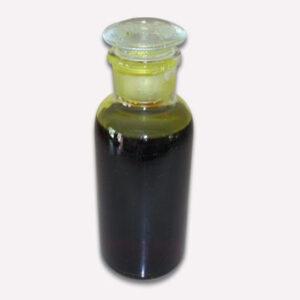
FERRIC CHLORIDE SOLUTION 44%
In Stock
Highlights:
Ferric Chloride Solution 44%
Premium Quality Ferric Chloride Solution 44% – High-Efficiency Iron-Based Coagulant & Advanced Flocculant for Water Treatment, Wastewater Processing, Municipal Applications & Industrial Systems
✅ Premium Iron-Based Coagulant – Superior Turbidity & Phosphorus Removal Performance
✅ High Concentration Formula – 44% FeCl₃ Content for Maximum Efficiency
✅ Excellent Performance Properties – Cold Water Effectiveness, Low Dosage Requirements, Superior Results
✅ Multi-Application Compatible – Enhanced Water Treatment, Municipal Systems, Industrial Processing & Wastewater Applications
✅ Quality Assured – Established Performance Guidelines Supporting Optimal Coagulation Results
Description
High-Quality Ferric Chloride Solution 44%
Ferric Chloride Solution 44%, with chemical formula FeCl₃·6H₂O and CAS number 10025-77-1, containing 44% ferric chloride by weight in aqueous solution, is a specialized high-performance iron-based coagulant appearing as dark brown to reddish-brown liquid with excellent stability and outstanding coagulation properties. Ferric chloride is an inorganic compound with the formula FeCl3. It is a strong Lewis acid and is often used as a coagulating agent in wastewater treatment. The compound is highly soluble in water and changes to a brown color when dissolved. When ferric chloride is added to water, it hydrolyzes to form ferric hydroxide, which is a floc. This floc can attract and bind with other particles in the water, making them larger and easier to remove. Ferric Chloride Solution 44% represents one of the most effective iron-based coagulants and flocculants, providing exceptional turbidity removal, superior phosphorus elimination, excellent suspended solids removal, and outstanding cold water performance, making it essential for municipal water treatment plants, drinking water facilities, industrial wastewater processing, sewage treatment plants, and specialized applications requiring high-performance coagulation characteristics and reliable water clarification behavior.
At Chemicals & Process Equipment Limited, we supply high-performance Ferric Chloride Solution 44% manufactured under stringent quality control standards and international water treatment, municipal processing, industrial wastewater, and environmental specifications. Our comprehensive product range includes various concentrations, stabilized formulations, and specialized grades meeting diverse requirements for drinking water treatment, municipal wastewater processing, industrial water clarification, phosphorus removal, and specialized chemical applications across global water treatment, municipal, industrial, and environmental markets.
✅ Advanced Iron Coagulation Technology – Optimized Concentration & Multi-Industry Applications
✅ Consistent Quality Standards – Multiple Product Classifications with Comprehensive Documentation
✅ Essential Water Treatment Chemical – Superior Municipal, Industrial & Environmental Performance
✅ Multi-Industry Applications – Water Treatment, Municipal Systems, Industrial Processing, Environmental Remediation
✅ Technical Support Package – Complete Application Guidance & Performance Optimization
The global ferric chloride market was valued at approximately USD 5.8 billion in 2023 and is projected to reach USD 8.4 billion by 2030, growing at a CAGR of 5.4% during the forecast period. Market expansion is driven by increasing municipal water treatment requirements, growing industrial wastewater processing needs, expanding phosphorus removal regulations, and advanced coagulation technologies requiring high-performance ferric chloride solutions.
Technical Specifications & Ferric Chloride Solution 44% Properties
| Property | Standard Grade | Municipal Grade | Industrial Grade | Drinking Water | Wastewater Grade | Environmental |
|---|---|---|---|---|---|---|
| FeCl₃ Content (%) | 42-46 | 43-45 | 40-48 | 43-45 | 38-46 | 42-46 |
| Fe Content (%) | 15.5-17.0 | 15.8-16.5 | 14.8-17.5 | 15.8-16.5 | 14.0-17.0 | 15.5-17.0 |
| Free HCl (%) | 0.5-2.0 | 0.8-1.5 | 0.3-2.5 | 0.8-1.2 | 0.5-2.0 | 0.6-1.8 |
| Specific Gravity | 1.42-1.48 | 1.43-1.46 | 1.40-1.50 | 1.43-1.46 | 1.38-1.48 | 1.42-1.47 |
| pH (1% solution) | 0.5-2.5 | 1.0-2.0 | 0.3-3.0 | 1.2-2.0 | 0.5-2.8 | 0.8-2.2 |
| Density (kg/m³) | 1420-1480 | 1430-1460 | 1400-1500 | 1430-1460 | 1380-1480 | 1420-1470 |
| Viscosity (cP at 25°C) | 2-8 | 3-6 | 2-10 | 3-6 | 2-8 | 3-7 |
| Freezing Point (°C) | -20 to -35 | -22 to -30 | -18 to -40 | -22 to -28 | -15 to -35 | -20 to -32 |
| Boiling Point (°C) | 105-120 | 108-115 | 102-125 | 108-115 | 100-120 | 105-118 |
| Water Content (%) | 54-58 | 55-57 | 52-60 | 55-57 | 54-62 | 54-58 |
| Insoluble Matter (%) | <0.5 | <0.2 | <0.8 | <0.15 | <1.0 | <0.3 |
| Suspended Solids (%) | <0.3 | <0.1 | <0.5 | <0.1 | <0.8 | <0.2 |
| Color (APHA) | Dark brown | Brown | Dark brown | Brown | Dark brown | Brown |
| Odor | Slight acidic | Slight acidic | Acidic | Slight acidic | Acidic | Slight acidic |
| Iron as Fe²⁺ (%) | <0.5 | <0.3 | <1.0 | <0.2 | <1.0 | <0.4 |
| Copper (ppm) | <10 | <5 | <20 | <3 | <25 | <8 |
| Zinc (ppm) | <20 | <10 | <30 | <5 | <40 | <15 |
| Lead (ppm) | <5 | <2 | <10 | <1 | <15 | <3 |
| Arsenic (ppm) | <2 | <1 | <5 | <0.5 | <8 | <1.5 |
| Cadmium (ppm) | <1 | <0.5 | <3 | <0.2 | <5 | <1 |
| Mercury (ppm) | <0.5 | <0.2 | <1 | <0.1 | <2 | <0.3 |
| Chromium (ppm) | <5 | <2 | <10 | <1 | <15 | <3 |
| Nickel (ppm) | <5 | <2 | <10 | <1 | <15 | <3 |
| Sulfate (SO₄²⁻) (%) | <1.0 | <0.5 | <2.0 | <0.3 | <2.5 | <0.8 |
| Chloride (Cl⁻) (%) | 28-32 | 29-31 | 26-34 | 29-31 | 25-34 | 28-32 |
| Chemical Stability | Excellent | Excellent | Good | Excellent | Fair | Very Good |
| Storage Stability | Very Good | Good | Fair | Good | Poor | Good |
| Thermal Stability | Good | Good | Fair | Good | Fair | Good |
| Corrosivity | High | High | Very High | High | Very High | High |
| pH Operating Range | 4.0-9.5 | 5.5-8.5 | 3.5-10.0 | 6.0-8.5 | 4.0-9.8 | 4.5-9.0 |
| Temperature Range (°C) | 0-40 | 5-35 | 0-45 | 8-30 | 5-40 | 2-38 |
| Dosage Range (ppm) | 10-200 | 15-100 | 5-300 | 20-80 | 10-500 | 15-150 |
| Effective Conc. (ppm) | 25-100 | 30-60 | 15-150 | 35-55 | 20-250 | 30-80 |
| Turbidity Removal (%) | 85-98 | 90-97 | 80-98 | 92-98 | 75-95 | 88-96 |
| Color Removal (%) | 75-92 | 80-90 | 70-95 | 85-92 | 65-88 | 78-90 |
| COD Removal (%) | 45-75 | 50-70 | 40-80 | 55-72 | 35-70 | 48-75 |
| BOD Removal (%) | 40-70 | 45-65 | 35-75 | 50-68 | 30-65 | 42-68 |
| TSS Removal (%) | 90-99 | 92-98 | 85-99 | 94-98 | 80-96 | 90-97 |
| Phosphorus Removal (%) | 85-99 | 90-97 | 80-99 | 92-96 | 75-95 | 88-98 |
| Algae Removal (%) | 80-95 | 85-93 | 75-98 | 88-94 | 70-92 | 82-95 |
| Particle Size Range (μm) | 0.1-500 | 0.5-100 | 0.05-1000 | 0.2-50 | 0.1-2000 | 0.3-200 |
| Floc Formation Time (min) | 3-12 | 5-10 | 2-15 | 6-12 | 3-20 | 4-12 |
| Floc Density (g/L) | 1.8-3.5 | 2.2-3.2 | 1.5-4.0 | 2.5-3.2 | 1.2-3.8 | 2.0-3.5 |
| Settling Velocity (m/h) | 1.0-4.5 | 1.5-3.5 | 0.8-5.0 | 2.0-3.8 | 0.5-4.2 | 1.2-4.0 |
| Sludge Production (kg/m³) | 3-8 | 4-7 | 2-12 | 5-7 | 3-15 | 4-8 |
| Sludge Dewaterability | Excellent | Very Good | Good | Very Good | Fair | Good |
| Residual Iron (ppm) | <0.3 | <0.2 | <0.5 | <0.15 | <0.8 | <0.25 |
| pH Impact | -0.5 to -2.0 | -0.8 to -1.5 | -0.3 to -2.5 | -0.8 to -1.2 | -0.5 to -2.8 | -0.6 to -1.8 |
| Alkalinity Demand | Medium | Medium | Low-High | Medium | Low-High | Medium |
| Cold Water Performance | Excellent | Excellent | Excellent | Excellent | Very Good | Excellent |
| Hot Water Performance | Good | Good | Fair | Good | Fair | Good |
| Foaming Tendency | Low | Very Low | Low | Very Low | Medium | Low |
| Odor Generation | Minimal | Minimal | Low | Minimal | Low | Minimal |
| Environmental Impact | Low | Very Low | Low | Very Low | Low | Very Low |
| Aquatic Toxicity | Low | Very Low | Low-Medium | Very Low | Low-Medium | Low |
| Biodegradability | N/A | N/A | N/A | N/A | N/A | N/A |
| Storage Temperature (°C) | 5-35 | 10-30 | 0-40 | 10-30 | 5-40 | 8-35 |
| Storage Period (months) | 12 | 9 | 15 | 9 | 18 | 12 |
| Shelf Life (months) | 12 | 9 | 15 | 9 | 18 | 12 |
| Container Material | PE/FRP | PE/FRP | SS/FRP | PE/FRP | SS/FRP | PE/FRP |
| Packaging | IBC/Drum | IBC | Bulk/IBC | IBC/Drum | Bulk | IBC/Drum |
| Transport Class | Class 8 | Class 8 | Class 8 | Class 8 | Class 8 | Class 8 |
| UN Number | UN1773 | UN1773 | UN1773 | UN1773 | UN1773 | UN1773 |
| Packing Group | III | III | III | III | III | III |
| Hazard Label | Corrosive | Corrosive | Corrosive | Corrosive | Corrosive | Corrosive |
| Personal Protection | Full PPE | Full PPE | Enhanced PPE | Standard PPE | Full PPE | Standard PPE |
| Safety Equipment | Emergency shower | Eye wash | Full safety | Basic safety | Emergency kit | Standard safety |
| Ventilation | Required | Required | Enhanced | Standard | Required | Standard |
| Compatibility | Good | Very Good | Fair | Excellent | Poor | Good |
| Mixing Requirements | Standard | Easy | Careful | Standard | Vigorous | Standard |
| Injection System | Metering pump | Dosing pump | Various | Precision pump | Heavy duty | Standard pump |
| Feed Rate Control | Standard | Precise | Variable | Precise | Basic | Standard |
| Monitoring | pH/Turbidity | Multiple | Basic | Advanced | pH only | Standard |
| Analysis Method | Titration | Colorimetric | Various | Standard | Basic | Standard |
| Quality Control | Standard | Enhanced | Basic | Enhanced | Standard | Standard |
| Regulatory Status | Approved | NSF approved | Industrial use | NSF approved | Approved | Environmental |
| Drinking Water | Limited | Yes | No | Yes | No | Limited |
| Food Contact | No | Limited | No | Limited | No | No |
| NSF Certification | Limited | Yes | No | Yes | No | Limited |
| REACH Compliance | Yes | Yes | Yes | Yes | Yes | Yes |
| Cost per kg Fe | Medium | Medium-High | Low-Medium | High | Low | Medium |
| Application Method | Continuous | Continuous | Batch/Continuous | Continuous | Continuous | Continuous |
| Process Integration | Standard | Enhanced | Basic | Advanced | Standard | Standard |
| Technical Support | Standard | Enhanced | Basic | Complete | Standard | Standard |
Available Product Types:
- Standard Grade 44% FeCl₃ for general water treatment applications
- Municipal Grade 44% FeCl₃ for drinking water and municipal systems
- Industrial Grade 44% FeCl₃ for industrial wastewater processing
- Drinking Water Grade 44% FeCl₃ for potable water applications
- Wastewater Grade 44% FeCl₃ for sewage treatment plants
- Environmental Grade 44% FeCl₃ for environmental remediation
- Low Acid 44% FeCl₃ for sensitive pH applications
- High Purity 44% FeCl₃ for critical applications
- Stabilized 44% FeCl₃ for extended storage periods
- Food Grade 44% FeCl₃ for indirect food contact applications
- Pharmaceutical Grade 44% FeCl₃ for specialized requirements
- Technical Grade 44% FeCl₃ for laboratory and research
- Custom Concentration FeCl₃ (38-48%) for specific requirements
- Bulk 44% FeCl₃ Solutions for large-scale operations
- Pre-diluted FeCl₃ Solutions for direct application systems
Specialized Application Solutions:
- Coagulation system design and jar testing optimization
- Chemical feed system design and equipment selection
- Dosage optimization and process control strategies
- Performance monitoring and analytical services
- Corrosion assessment and material selection guidance
- Safety training and handling procedure development
- Custom formulation and concentration adjustment
- Regulatory compliance assistance and documentation
- Environmental impact assessment and reporting
- Cost optimization and chemical program evaluation
Municipal Water Treatment Applications
Drinking Water Treatment Municipal water facilities utilize Ferric Chloride Solution 44% for primary coagulation, turbidity removal, and water purification requiring potable water specifications. Ferric Chloride offers versatility in the water treatment industry by working as a flocculant and coagulant, as well as a reactant. It promotes faster sedimentation in general and specifically, better sedimentation in cold water, making it an ideal choice for the industry. Ferric Chloride has several applications in the potable water industry, including both high and low turbidity removal, enhanced coagulation, NOM (natural organic matter), DBP (disinfection by-products) precursor removal, color removal, arsenic reduction softening solids sedimentation aid, and as a filtration aid. Water treatment plants employ 44% ferric chloride for particle removal, organic matter elimination, and drinking water applications requiring consumer safety, regulatory compliance, and operational efficiency with typical dosage of 15-60 mg/L.
Municipal Wastewater Treatment Municipal wastewater facilities use Ferric Chloride Solution 44% for primary clarification, phosphorus removal, and effluent polishing requiring wastewater treatment specifications. Treatment plants employ ferric chloride for suspended solids removal, BOD reduction, and wastewater applications requiring discharge compliance, environmental protection, and operational reliability.
Sewage Treatment Plants Sewage processing facilities utilize Ferric Chloride Solution 44% for primary treatment, sludge conditioning, and tertiary polishing requiring sewage treatment specifications. Municipal systems employ ferric chloride for phosphorus precipitation, suspended solids removal, and sewage applications requiring regulatory compliance and environmental protection.
Storm Water Treatment Storm water management systems use Ferric Chloride Solution 44% for runoff treatment, sediment removal, and pollution control requiring storm water specifications. Municipal drainage systems employ ferric chloride for turbidity reduction, pollutant removal applications requiring environmental protection and regulatory compliance.
Industrial Water Treatment Applications
Industrial Process Water Manufacturing facilities utilize Ferric Chloride Solution 44% for process water clarification, cooling water treatment, and industrial water conditioning requiring process water specifications. Chemical plants, steel mills, and manufacturing operations employ ferric chloride for suspended solids removal, turbidity control, and process applications requiring equipment protection, process efficiency, and operational reliability.
Industrial Wastewater Industrial facilities use Ferric Chloride Solution 44% for primary treatment, metal removal, and effluent processing requiring industrial wastewater specifications. Manufacturing plants employ ferric chloride for COD reduction, color removal, and wastewater applications requiring discharge compliance, environmental protection, and cost-effective treatment.
Chemical Wastewater Chemical processing facilities utilize Ferric Chloride Solution 44% for specialized wastewater treatment, heavy metals precipitation, and complex effluent processing requiring chemical wastewater specifications. Chemical plants employ ferric chloride for neutralization reactions, metal removal applications requiring regulatory compliance and environmental safety.
Power Plant Applications Power generation facilities use Ferric Chloride Solution 44% for cooling water treatment, ash pond clarification, and FGD wastewater processing requiring power plant specifications. Utility companies employ ferric chloride for suspended solids removal, water recycling applications requiring environmental compliance and operational efficiency.
Specialty Treatment Applications
Phosphorus Removal Wastewater facilities utilize Ferric Chloride Solution 44% for advanced phosphorus removal, nutrient reduction, and eutrophication prevention requiring phosphorus removal specifications. Treatment plants employ ferric chloride for chemical precipitation, phosphorus applications requiring stringent discharge limits and environmental protection with removal efficiencies of 85-99%.
Heavy Metals Removal Industrial treatment systems use Ferric Chloride Solution 44% for heavy metals precipitation, toxic metal removal, and contaminated water processing requiring metals removal specifications. Industrial facilities employ ferric chloride for copper, zinc, lead, and other metal removal applications requiring regulatory compliance and environmental safety.
Oil and Gas Applications Petroleum facilities utilize Ferric Chloride Solution 44% for produced water treatment, oil-water separation, and refinery wastewater processing requiring oil and gas specifications. Petroleum operations employ ferric chloride for emulsion breaking, suspended solids removal applications requiring environmental compliance and water recycling.
Food Processing Wastewater Food manufacturing facilities use Ferric Chloride Solution 44% for food wastewater treatment, organic matter removal, and effluent processing requiring food industry specifications. Food processors employ ferric chloride for oil and grease removal, suspended solids control applications requiring environmental compliance and operational efficiency.
Environmental Applications
Landfill Leachate Landfill operations utilize Ferric Chloride Solution 44% for leachate treatment, contaminant removal, and groundwater protection requiring landfill specifications. Waste management facilities employ ferric chloride for heavy metals precipitation, organic matter reduction applications requiring environmental protection and regulatory compliance.
Mine Water Treatment Mining operations use Ferric Chloride Solution 44% for acid mine drainage treatment, metal precipitation, and environmental remediation requiring mining specifications. Mining companies employ ferric chloride for pH adjustment, iron oxidation applications requiring environmental restoration and water quality improvement.
Contaminated Groundwater Environmental remediation projects utilize Ferric Chloride Solution 44% for groundwater treatment, contaminant removal, and aquifer restoration requiring environmental specifications. Remediation contractors employ ferric chloride for arsenic removal, iron precipitation applications requiring site cleanup and environmental protection.
Industrial Spill Response Emergency response operations use Ferric Chloride Solution 44% for spill containment, contamination control, and environmental protection requiring emergency response specifications. Environmental contractors employ ferric chloride for rapid treatment, pollution control applications requiring immediate response and environmental safety.
Specialized Industrial Applications
Textile Industry Textile manufacturing facilities utilize Ferric Chloride Solution 44% for dye removal, color reduction, and textile effluent treatment requiring textile specifications. Textile plants employ ferric chloride for wastewater treatment, color removal applications requiring environmental compliance and water recycling with excellent performance in dye removal.
Paper Manufacturing Paper mills use Ferric Chloride Solution 44% for process water clarification, effluent treatment, and sludge conditioning requiring paper industry specifications. Paper manufacturers employ ferric chloride for suspended solids removal, dissolved air flotation applications requiring fiber recovery and environmental compliance.
Electronics Industry Electronics manufacturing facilities utilize Ferric Chloride Solution 44% for PCB etching, metal etching, and specialized applications requiring electronics specifications. Electronics manufacturers employ ferric chloride for copper etching, circuit board production applications requiring precision processing and quality control.
Metal Finishing Metal processing facilities use Ferric Chloride Solution 44% for wastewater treatment, metal removal, and surface treatment requiring metal finishing specifications. Metal finishers employ ferric chloride for electroplating wastewater, metal recovery applications requiring regulatory compliance and resource recovery.
Quality Control & Testing Procedures
Comprehensive Quality Assurance Every production batch undergoes extensive testing to ensure compliance with ferric chloride standards, water treatment requirements, municipal specifications, and international application standards. Our quality control laboratory employs advanced analytical techniques including titration methods, ICP-OES analysis, and comprehensive performance evaluation.
Quality assurance procedures include:
- FeCl₃ content determination using standardized titration methods
- Iron content analysis using ICP-OES spectroscopy
- Free HCl analysis using acid-base titration
- Specific gravity measurement using calibrated hydrometers
- pH determination using calibrated electrodes
- Density testing using precision measurement equipment
- Viscosity measurement using rotational viscometers
- Freezing point determination using cryoscopic methods
- Water content analysis using Karl Fischer titration
- Insoluble matter testing using filtration methods
- Suspended solids determination using gravimetric analysis
- Heavy metals analysis using ICP-MS methods
- Trace metals testing using atomic absorption spectroscopy
- Sulfate analysis using gravimetric methods
- Chloride determination using argentometric titration
- Chemical stability testing using accelerated aging
- Storage stability assessment using temperature cycling
- Thermal stability evaluation using DSC analysis
- Corrosion testing using metal coupon studies
- Coagulation performance testing using jar tests
- Turbidity removal efficiency evaluation using nephelometry
- Color removal assessment using spectrophotometric methods
- COD removal testing using dichromate methods
- BOD removal evaluation using respirometric analysis
- Phosphorus removal efficiency using colorimetric methods
- Suspended solids removal testing using gravimetric methods
- Floc formation analysis using particle size distribution
- Settling velocity measurement using column tests
- Sludge production assessment using mass balance
- Residual iron analysis using colorimetric methods
- pH impact evaluation using buffer studies
- Environmental impact assessment using ecotoxicology
- Aquatic toxicity testing using standard bioassays
- Container compatibility testing using corrosion studies
- Transport stability evaluation using vibration testing
- Quality system compliance using ISO standards
- Regulatory approval maintenance using documentation
- Customer application support using technical consultation
- Performance monitoring using field testing
- Continuous improvement using statistical analysis
Storage & Handling Procedures Implement proper storage conditions including temperature control, corrosion-resistant containers, proper ventilation, and comprehensive safety procedures for maintaining Ferric Chloride Solution 44% quality and ensuring safe handling throughout storage and application periods.
For comprehensive information about ferric chloride optimization in wastewater treatment and coagulation performance studies, you can reference this detailed Springer research article on domestic wastewater treatment optimization using ferric chloride which provides extensive coverage of FeCl₃ coagulation mechanisms, process optimization, performance evaluation, and treatment effectiveness from leading water treatment researchers and coagulation specialists.
Market Applications & Industry Trends
Municipal Treatment Expansion Growing municipal water treatment requirements, increasing drinking water quality standards, expanding wastewater treatment capacity, and rising environmental regulations drive continued demand for high-performance 44% ferric chloride in municipal applications requiring reliable coagulation, effective phosphorus removal, and regulatory compliance.
Industrial Process Optimization Advancing industrial processes, increasing water recycling requirements, expanding zero liquid discharge initiatives, and growing operational efficiency demands drive adoption of concentrated ferric chloride formulations for industrial applications requiring process optimization, cost reduction, and environmental compliance.
Environmental Compliance Growth Expanding environmental regulations, increasing phosphorus removal mandates, growing discharge standards, and rising treatment efficiency requirements drive development of high-performance ferric chloride applications requiring enhanced removal efficiency and cost-effective operation.
Technology Integration Advanced process control systems, automated dosing technologies, real-time monitoring capabilities, and integrated treatment solutions support adoption of optimized ferric chloride applications requiring precision control and performance optimization.
Environmental & Regulatory Compliance
Drinking Water Standards Ferric Chloride Solution 44% complies with drinking water regulations, NSF/ANSI 60 certification, and international potable water guidelines ensuring effective coagulation with established performance criteria and comprehensive safety assessments for municipal water treatment applications.
Wastewater Treatment Standards Adherence to wastewater discharge regulations, effluent quality standards, and environmental protection requirements ensures appropriate use in wastewater applications with established treatment criteria and environmental protection measures.
Industrial Safety Standards Compliance with industrial safety regulations, occupational health requirements, and international safety guidelines ensures safe handling in industrial applications with established safety protocols and worker protection measures including proper PPE and ventilation.
Environmental Protection Standards Environmental compliance includes aquatic impact assessment, discharge monitoring requirements, and sustainable application practices ensuring responsible use with consideration for environmental protection and ecosystem safety.
Transportation Regulations Compliance with hazardous materials transportation regulations, UN classification requirements, and international shipping standards ensures safe transport with established packaging, labeling, and handling procedures.
Performance Advantages & Technical Benefits
✔ Superior Coagulation Efficiency – Outstanding turbidity and suspended solids removal performance
✔ High Iron Concentration – 44% FeCl₃ content for maximum treatment efficiency
✔ Excellent Cold Water Performance – Superior effectiveness in low temperature conditions
✔ Outstanding Phosphorus Removal – 85-99% phosphorus elimination capability
✔ Broad pH Operating Range – Effective across wide pH and temperature ranges
✔ Rapid Floc Formation – Quick particle agglomeration and excellent settling
✔ Dense Sludge Production – Minimal waste volume and excellent dewaterability
✔ Cost-Effective Treatment – Low dosage requirements with high efficiency
✔ Chemical Stability – Extended shelf life and reliable performance
✔ Regulatory Compliance – NSF certified and internationally approved
✔ Environmental Safety – Controlled environmental impact and aquatic effects
✔ Process Flexibility – Excellent integration with existing treatment systems
✔ Technical Support – Complete application guidance and optimization services
✔ Quality Assurance – Consistent performance across all production batches
✔ Global Availability – Reliable supply chains and worldwide distribution
✔ Proven Performance – Decades of successful water treatment applications
Our Ferric Chloride Solution 44% products represent industry-leading standards in iron-based coagulation technology and multi-industry water treatment solutions, specifically manufactured for demanding municipal water treatment applications, industrial wastewater processing, drinking water purification systems, and environmental remediation projects requiring exceptional coagulation characteristics, reliable phosphorus removal behavior, and comprehensive performance optimization. We provide complete technical support, application guidance, and performance consultation to ensure optimal results across your specialized municipal, industrial, wastewater, or environmental applications.
For detailed specifications, technical data sheets, or application-specific recommendations, contact our specialized iron coagulants division. We offer complete support including product selection, jar testing services, dosage optimization, performance monitoring, and technical assistance to maximize coagulation effectiveness in your water treatment, municipal, industrial, or environmental processing applications.
For more information about our products, feel free to Contact Us today.
Related products
Reviews
There are no reviews yet.